

Chicken Plinko Reference: Figures and Their Sources
Chicken Plinko reference pages sit in one place: 4 of them so far, every one dated and written to the same method. Each page settles one number or one definition, quotes it in the form the provider or the register prints it, names that source, and dates itself. The arithmetic behind every verdict and lesson sits here. Written for adults aged 18 or over.
In short: this section holds 4 reference pages about Chicken Plinko, each one dated. Each figure on these reference pages comes from one ledger: returns of 96.00% and 96.14% from two surfaces of the same maker and a win ceiling of 1,000x the bet, each quoted as its own source prints it. 0 of 4 carry a score out of 10, last checked .
Table of contents
- Chicken Plinko Page Index and Dates
- How a Chicken Plinko Number Is Sourced
- Return First, Then the Ceiling
- Reading Order: The Number, Then Its Context
- Known Limits of the Chicken Plinko Fact Desk
- Chicken Plinko Facts on Record
- Two RTP Figures
- 1,000x Ceiling Explained
- Studio and Licence Check
- Against Classic Plinko
- Chicken Plinko Session Frames
- Beyond Chicken Plinko Reference Pages
Chicken Plinko Page Index and Dates
4 reference pages, none of them carrying a score, all published .
| Page | Type | Published | Last edited |
|---|---|---|---|
| What Is the Chicken Plinko RTP? 96.00% or 96.14% | Explainer | ||
| Chicken Plinko Max Win in Numbers: 1,000x, but on What? | Explainer | ||
| 0 Register Entries: Our Chicken Plinko Onlyplay Check | Test record | ||
| Chicken Plinko vs Plinko: Egg, Ball and Eight Fixed Rows | Comparison |
How a Chicken Plinko Number Is Sourced
Sourcing a Chicken Plinko number is the whole job of this fact desk. Chicken Plinko is a plinko game, and catalogues and affiliate pages argue over its numbers until the original figure disappears. Each of the 4 pages here answers one question, says the answer once in full, and names the source beside it.
Two Sources, One Answer
What happens when two publishers disagree? The page prints both figures, names the surface that printed each, and says so when the maker itself does not say which one applies. Where the provider publishes nothing, the page says so instead of estimating. That is slower than averaging, but an averaged number is an invented number, and the reader pays for it.
- Return figures in the form the maker prints them, decimals and all, with the surface that printed each one.
- Win limits in the wording of whichever surface prints them.
- Supplier claims, taken to a register wherever a regulator publishes one and named unverified wherever none does.
- Definitions written in one sentence, then unpacked in a longer one.
Where the Verification Happens
We start inside the game client. If the client prints a figure, we confirm it there, working from the rules document through to the last drop of a recorded session, before opening a single catalogue. A supplier claim is the exception: that one goes to a register, and here every register we could download answered with no entry at all. Onlyplay runs the free demo we use for all of it. No account, no deposit, and the rules document is open to anyone who wants to read the constraints first.
Return First, Then the Ceiling
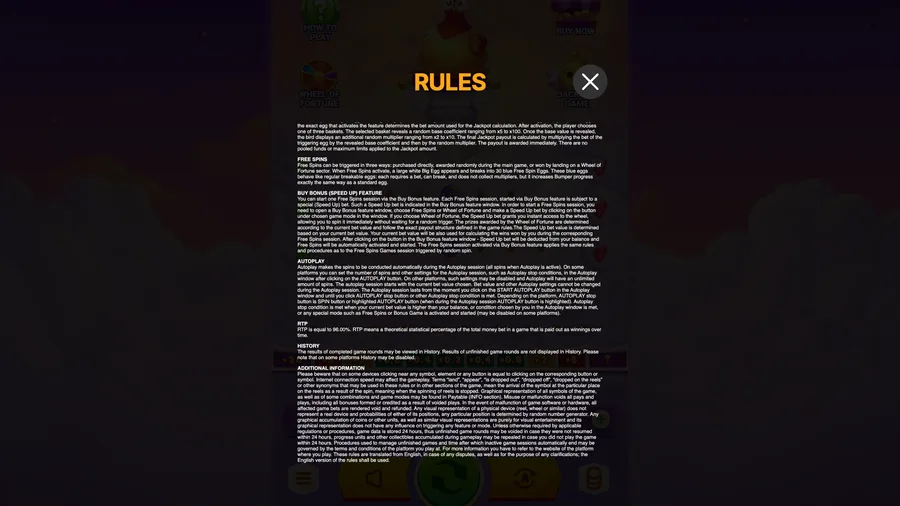
Return comes first, and the ceiling second. Return to player leads because it is the number most often misquoted. Onlyplay prints more than one return for this title on its own surfaces: 96.00% according to the rules document inside the game client and 96.14% according to the studio's own game page. These reference pages name which surface a figure comes from instead of quoting one of them as the return of the game. Where the studio publishes no figure for this title, these reference pages say so instead of quoting a third-party catalogue.
Where the Ceiling Comes From
The maker prints a ceiling on its game page, the rules inside the client name none, and a listing only repeats one. The published win ceiling reads 1,000x the bet, published by the studio on its game page as "Max win 1,000×" without saying which feature reaches it, and that is the figure the reference pages here are written against. A catalogue figure can mean something else entirely, so each page here names the screen it read. After return come the win ceiling, the bonus mechanics, the supplier licences, and the plain question of what kind of game this is.
A Definition That Travels
We write a definition page so it survives being quoted out of context: one sentence of answer, one paragraph of detail, one worked example. Need only the answer? Stop after the first sentence. Need the working? Read on.
- Every figure carries the date we last checked it.
- Unpublished values are labelled unpublished.
How This Section Verifies a Figure
Wording matters at a game fact desk. A definition that travels without its caveat turns into a false claim, so every definition here carries its exceptions, the numbers behind it, and whoever published it first.
A check date promises one thing only: somebody opened that source on that day. So a correction moves the update date of the page it touches, and we fix the ledger in the same pass. How we test sets out the full method, including how we score and what we refuse to publish.
We are an affiliate publisher. We disclose that beside every sponsored link, and no operator buys a kinder write-up. Local law decides whether you can open an account at all, and the operator enforces its own identity checks, so nothing on these reference pages is legal advice for any country.
Reading Order: The Number, Then Its Context
Reading order here is simple: a verdict gives the judgement, a lesson teaches the play, and the number sits in its context on these reference pages. Pick the page your question demands, for instance Two RTP figures, 1,000x ceiling explained and Studio and licence check.
A reference figure is only as fresh as its source, though. Every page carries its publication and revision dates, and the rules document inside the running game outranks anything a catalogue repeats. Availability of the game varies by country and by region, and these pages assume a reader of 18 or older.
Pages most readers open first:
- our review and score
- the free demo, round by round
- the return, and where it is printed
- how the game is actually played
Known Limits of the Chicken Plinko Fact Desk
The fact desk has edges worth stating up front. It offers published figures, register answers, and definitions. It does not offer an independent payout audit, a certificate we issued ourselves, or a laboratory report. Where no named test laboratory covers a title, the page says exactly that.
The maker publishes a return, a volatility grade and a maximum win on its own page for this game, and the rules document inside the running client prints a different return and no ceiling, so a page here names the surface that printed each number and then says what the figure leaves out.
- Conflicting sources are printed side by side, with the publisher of each one named.
- Nothing is quoted from a competitor or an affiliate feed as if it were a primary source.
Chicken Plinko Facts on Record
Chicken Plinko facts on record are the ledger values every page in this section has to agree with. Where the maker publishes a figure, we print it in the form the maker uses; where its own screens disagree with one another, we print each figure beside the screen that carries it.
- Game:
- Chicken Plinko (an Onlyplay instant game)
- Type:
- Plinko game
- RTP as published:
- 96.00% according to the rules document inside the game client, and 96.14% according to the studio's own game page.
- Max win:
- 1,000x the bet, published by the studio on its game page as "Max win 1,000×" without saying which feature reaches it.
Where the provider has never published a value, we mark it unpublished. That is a weaker answer than a number. It is also the only honest one we have.
We check every figure against that same ledger. When one contradicts it, we fix the page, the ledger, or both, and stamp the fix with the date we made it.
- We print a figure in the form the maker gives it, decimals and all.
- Where two of the maker's screens disagree, both figures appear, each credited to its screen.
Two RTP Figures
One studio, two numbers, 0.14 points apart. Filed as an explainer page, first published on .
What the Page Settles
We read both at the source on , then checked which one the game itself shows a player: none, until the menu is opened.
Onlyplay prints 96.00% in the Chicken Plinko rules and 96.14% on its game page: the house edge on each, and why the screen can't settle which applies.
The full working, with its sources, sits on Two RTP figures.
1,000x Ceiling Explained
We read the full rules inside the client, then pulled the server's bumper settings. An explainer entry; its last edit is dated .

Where Its Figures Come From
One route hits the figure exactly; a bumper sum goes past it on paper.
Onlyplay's Chicken Plinko lists a 1,000x top payout with no feature named. Jackpot door x100 times beak x10 hits it; capped bumpers pass it on paper.
Our game notes, with their sources, are written up on 1,000x ceiling explained.
Studio and Licence Check
The control names turned up at once, while Onlyplay stayed absent from both. This one went up on and is filed under test record.
What Else the Page Says
The studio behind this egg-drop Plinko, Onlyplay, names no legal entity or regulator on its site and has no entry in two licence registers we searched.
Open Studio and licence check for the sourced detail.
Against Classic Plinko
The ball Plinko titles from BGaming, Spribe and Stake hand the player two dials and are marketed as provably fair. Revised , and filed under comparison.
Why It Earns a Place Here
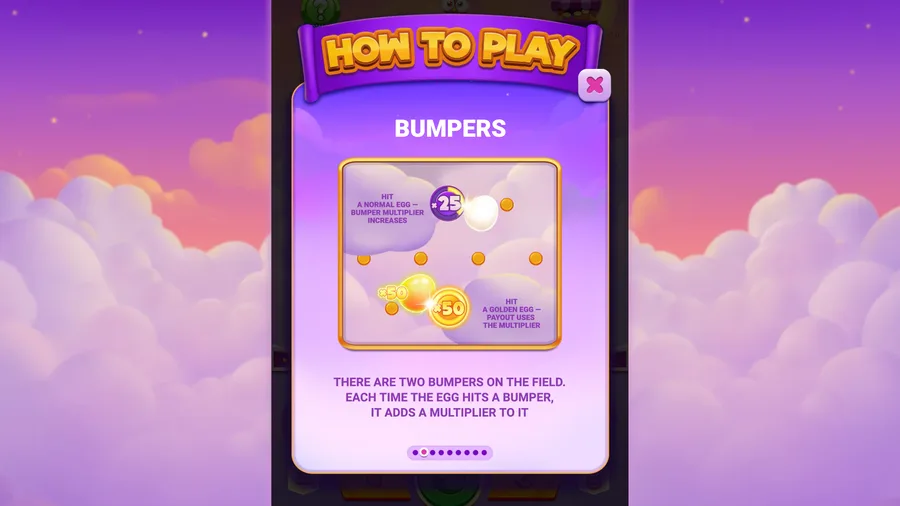
Onlyplay's egg version removes the dials, stacks five bonus features on the basket row, then keeps its randomness behind an RNG.
Against classic Plinko carries the rest of the argument.
Chicken Plinko Session Frames
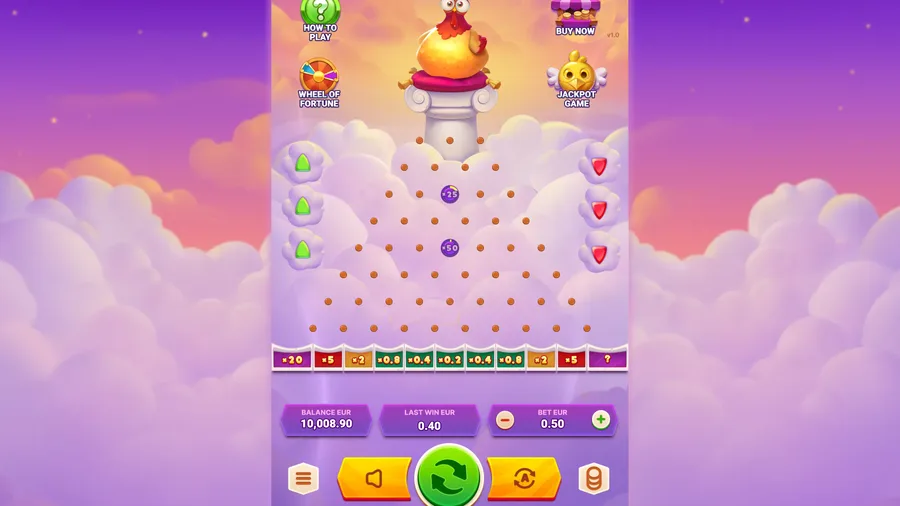
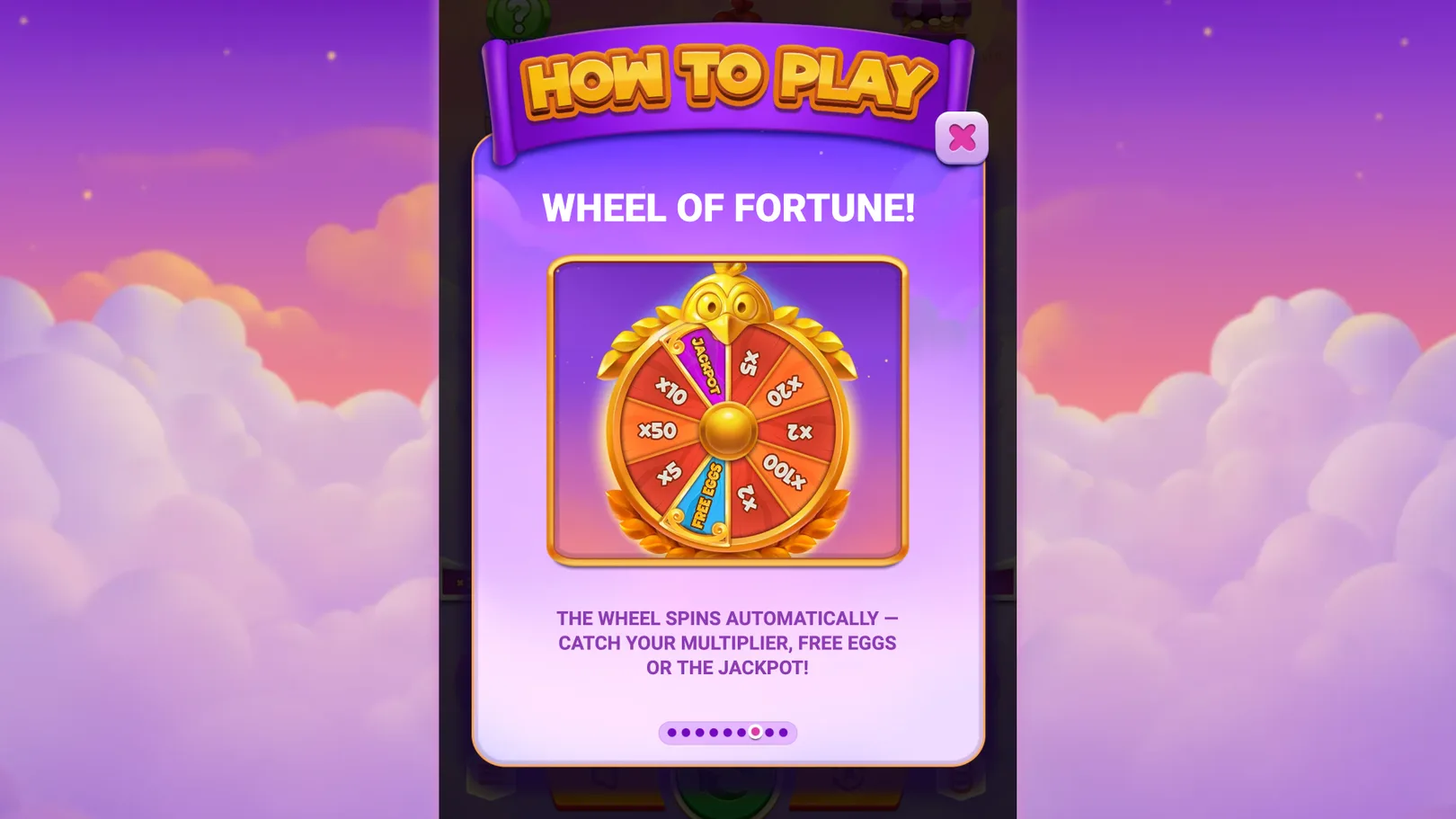
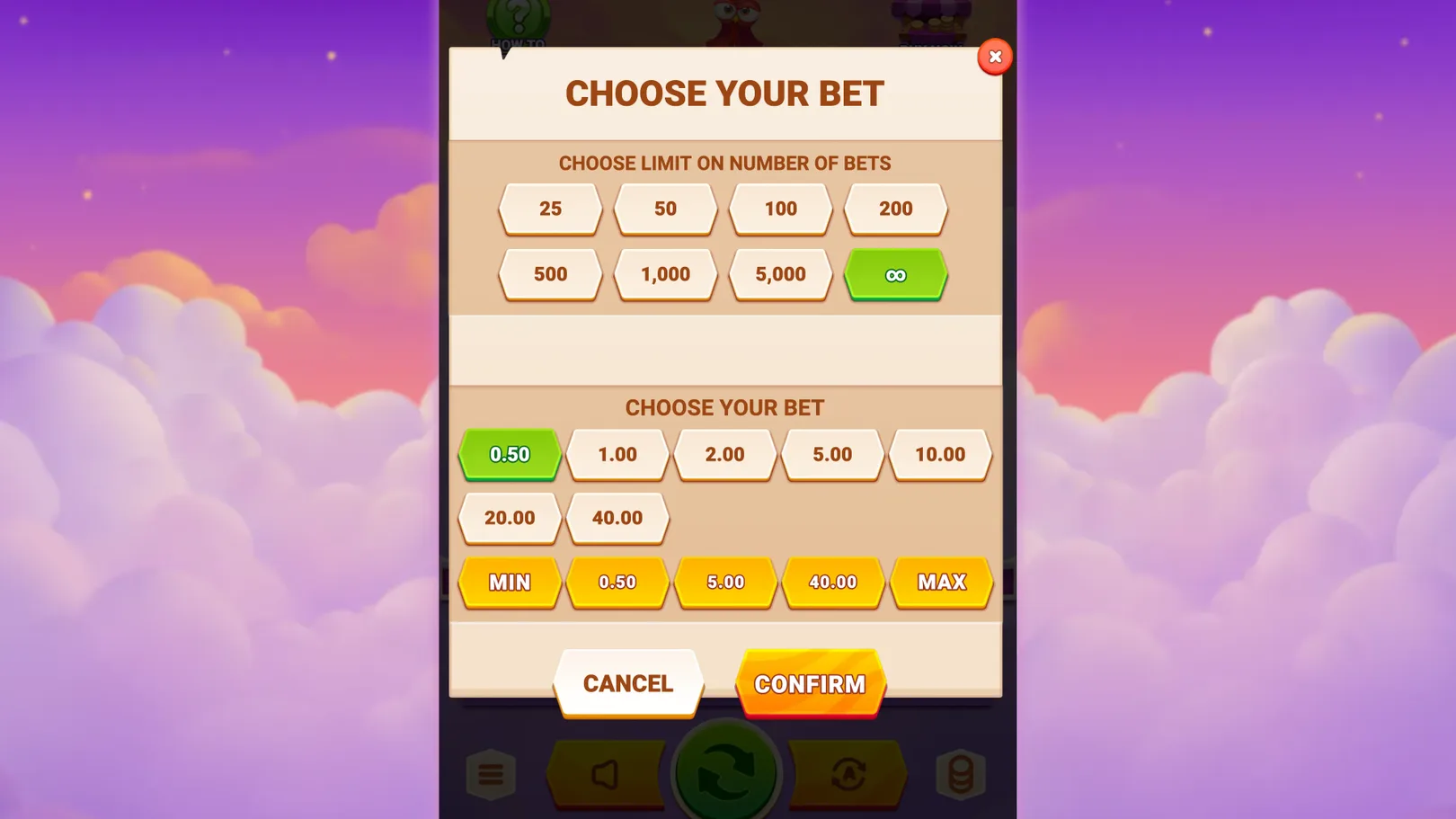
Every Chicken Plinko frame below comes from our own recorded session in the maker's free demo, and each caption says exactly what its frame shows.
A frame keeps the caption its manifest entry earns. That is why a help screen is labelled a help screen, not a round we played.
The manifest records exactly what each frame shows, and our method forbids us from claiming a word more than that.
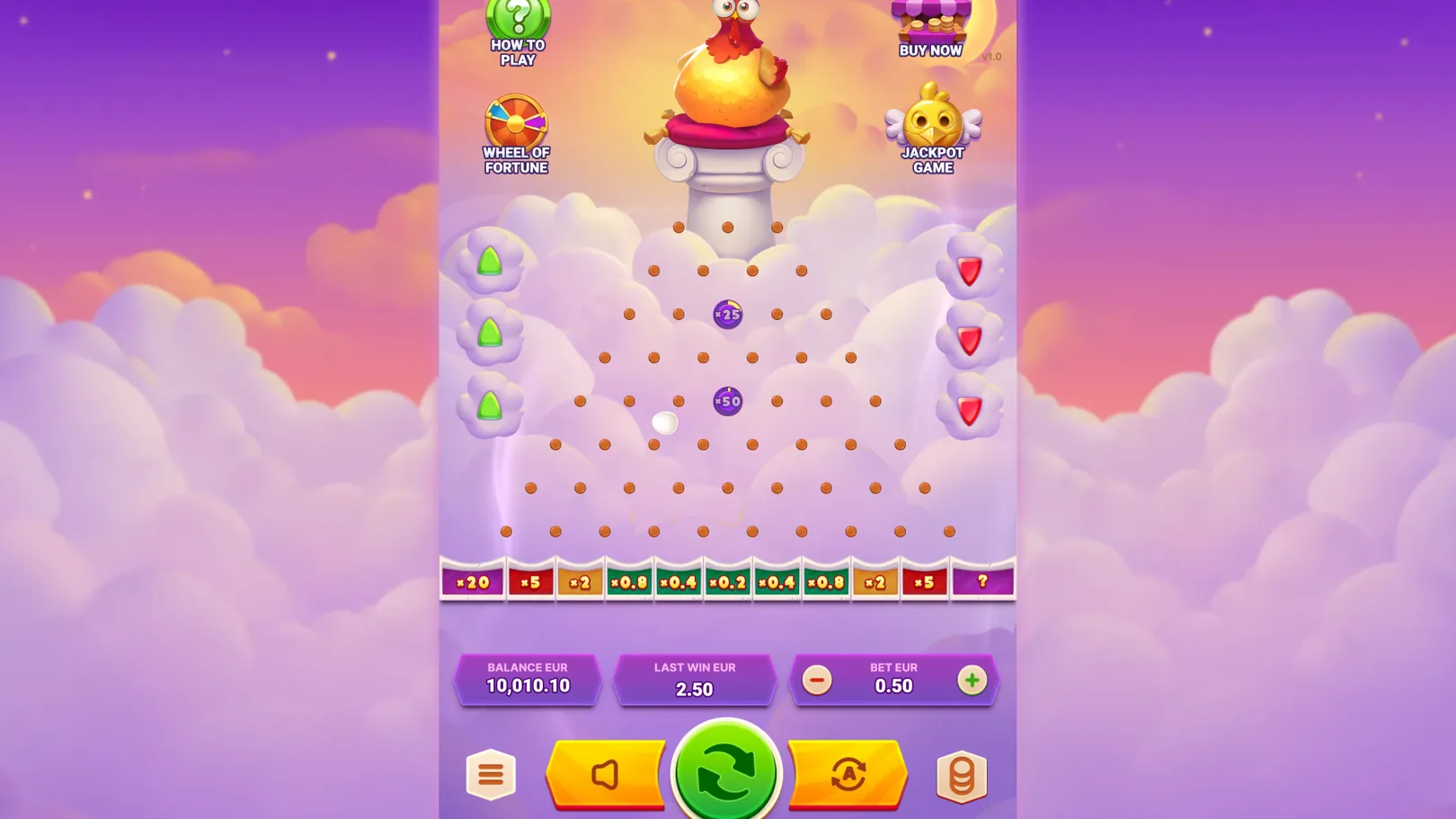

- We captured every frame ourselves, in the sessions its manifest entry records.
- A frame is reused across pages only when it genuinely illustrates both.